Disclosure: The Design Tools sells advertising, including the placements described near the end of this guide. Everything before that section is written to be useful whether or not you ever buy from us, and prices for other channels come from their own pages, checked on 12 September 2026.
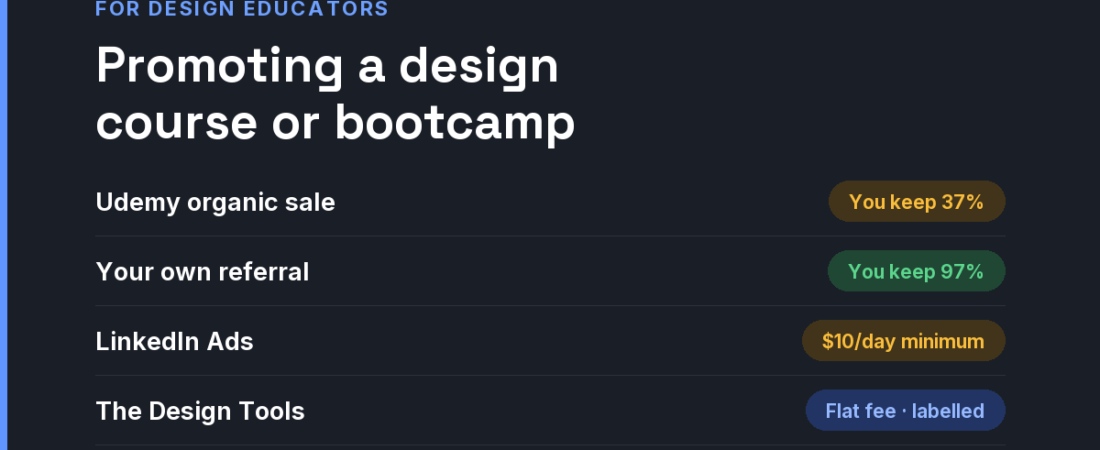
Short answer: Design students buy outcomes — a portfolio, a job, a credential employers recognise — not hours of video. Marketplaces bring discovery but take most of the margin: on Udemy, instructors keep 37% of organic sales and 97% of sales through their own coupons or referral links. The durable path is free lessons that prove your teaching, search for outcome-shaped queries, LinkedIn for career-changers ($10 daily minimum), and placements where people compare design courses.

What prospective design students check
- Student work. The portfolios of past students are the real product page. Show them, with permission, unedited.
- Who teaches. The instructor’s own shipped work, not just teaching credentials.
- What the credential is worth. Be precise about whether a certificate is recognised by employers or is a record of completion. Overclaiming here is the fastest way to lose trust.
- The full syllabus and refund policy. Career-changers are spending savings; they read the terms.
The channels, compared
| Channel | What it costs | Audience intent | Best for |
|---|---|---|---|
| Udemy marketplace | You keep 37% of organic sales; 97% of sales via your own coupon or referral link | Bargain-aware learners browsing a catalogue | Discovery for self-paced courses |
| Free lessons (YouTube, newsletter, blog) | Your time | Learning intent, building trust | Proving teaching quality before a sale |
| Google Ads | All-industry average CPC $5.26 (WordStream, 2025) | High on outcome queries (“UX portfolio course”) | Courses with a clear promised outcome |
| LinkedIn Ads | $10 minimum daily budget; $100 minimum lifetime for new campaigns | Career-changers and upskilling professionals | Higher-priced cohorts and bootcamps |
| Communities and design mentorship platforms | Your time; sponsorship terms vary | Peer recommendations | Cohort courses that rely on word of mouth |
| Niche design-tool sites (like ours) | Flat fees; ours start at $19 | Designers comparing learning resources | Specialist courses in one discipline |
The Udemy numbers explain the strategy. A marketplace is a place to be found; your own audience is where the margin is. Every student you can bring through your own link or list is worth roughly two and a half times an organic marketplace sale.
A 30-day plan for a small budget
- Week 1 — publish one excellent free lesson. The single most useful hour of your course, free, with a clear next step.
- Week 1 — show five student outcomes. Portfolios, first projects, or honest before-and-after critiques.
- Week 2 — state the credential precisely. What it is, who recognises it, what it does not guarantee.
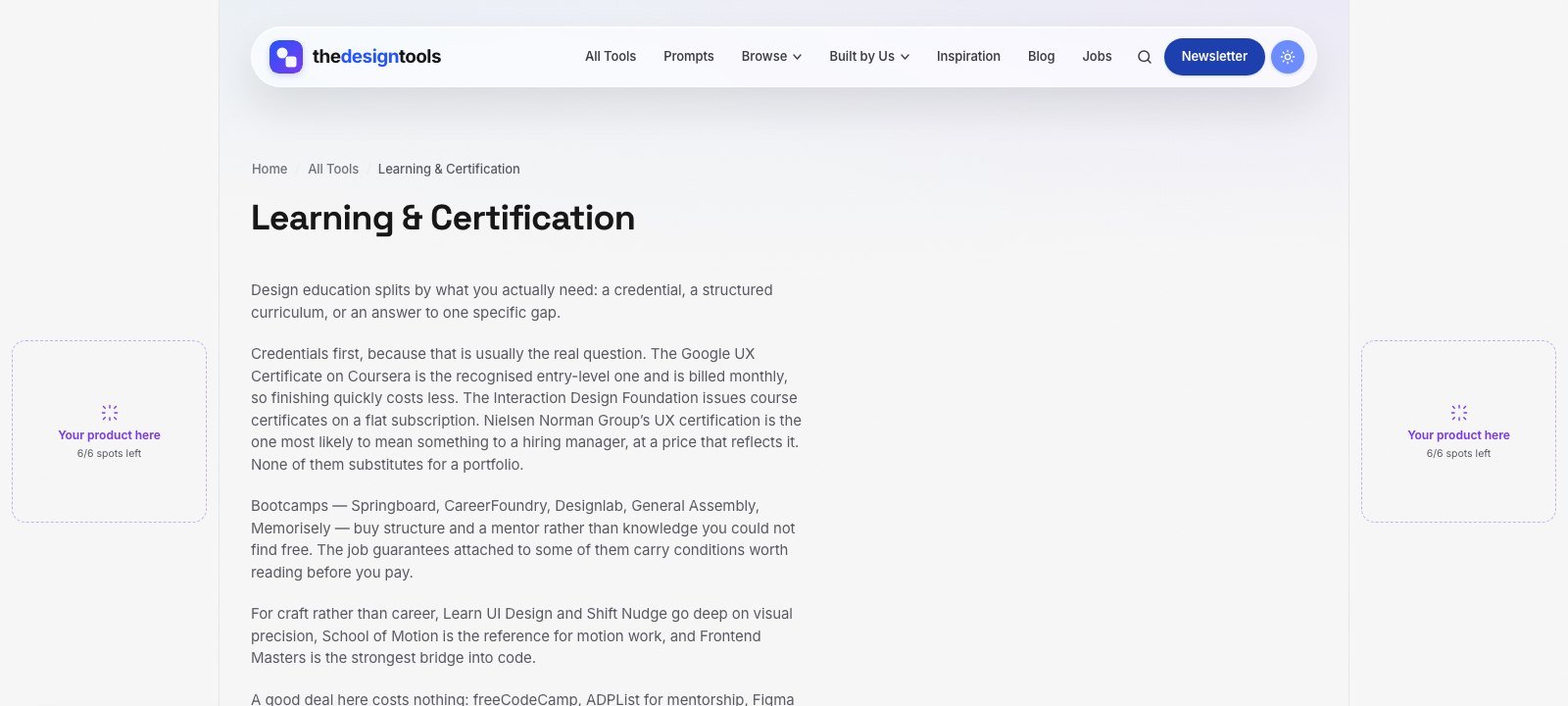
- Week 3 — place where learners compare. A Learning & Certification discipline placement with a tracked link to the free lesson, not the checkout.
- Week 4 — follow up with the list. Everyone who took the free lesson gets an invitation — through your own referral link.
Where The Design Tools fits — and where it does not
The Design Tools is an independent directory of design tools across nine disciplines. One of them is Learning & Certification — design courses, bootcamps, certificates and learning platforms — and every tool there is listed with its real drawbacks, not just its strengths. Designers and career-changers arrive to choose a tool, which is the moment a placement is worth something.
What you can buy, as of September 2026:
- Discipline page sponsorship — a labelled placement on the Learning & Certification page, $29 per 4 weeks. The smallest audience on the site, and the most decided one.
- Blog article sponsorship — a relevant article featured on the blog for a month, $39.
- Sitewide sponsor slot — a card in the sponsor rail on every page. Live availability is below.
- Launch package — every placement together for one 4-week run, $199.
Where it does not fit: we are a young, independent site that launched in July 2026, so our audience is small. If you need thousands of enrolments for a mass-market course, marketplaces and large ad platforms will reach more people. If your course serves designers in a specific discipline, this page reaches people deciding what to learn next. Ask us for the page’s recent traffic before you pay.
The rules we will not bend: every placement is labelled Sponsored and links with rel="sponsored". Paying never adds a listing, changes a ranking or removes a drawback from a review — listing is free and editorial. That is why a recommendation here is believed, and it is what a sponsor is paying to stand next to.
See every placement and send an inquiry → We reply within 24 hours.
Frequently asked questions
How do I promote a design course with no audience?
Start with one genuinely useful free lesson and show real student outcomes. Put the free lesson where designers look for learning resources, collect emails, and invite that list to the paid course through your own referral link.
How much does Udemy take from course sales?
When we checked on 12 September 2026, Udemy’s support page stated that instructors receive 37% of revenue from organic marketplace sales and 97% when a student buys through the instructor’s coupon or referral link.
Is LinkedIn advertising good for design bootcamps?
It can be for higher-priced programmes aimed at career-changers, because it targets by current role and industry. With a $10 daily minimum and high click costs, it rarely pays for low-priced self-paced courses.
What makes people trust a design certification?
Clear statements of what the certificate is and is not, visible student work, instructors with real shipped work, and a transparent syllabus and refund policy.
Does sponsoring The Design Tools get my tool listed or ranked higher?
No. Listing is free and editorial, and sponsorship is labelled and kept separate from it. Paying never adds a listing, changes a ranking or removes a drawback from a review.
{“@context”: “https://schema.org”, “@type”: “FAQPage”, “mainEntity”: [{“@type”: “Question”, “name”: “How do I promote a design course with no audience?”, “acceptedAnswer”: {“@type”: “Answer”, “text”: “Start with one genuinely useful free lesson and show real student outcomes. Put the free lesson where designers look for learning resources, collect emails, and invite that list to the paid course through your own referral link.”}}, {“@type”: “Question”, “name”: “How much does Udemy take from course sales?”, “acceptedAnswer”: {“@type”: “Answer”, “text”: “When we checked on 12 September 2026, Udemy’s support page stated that instructors receive 37% of revenue from organic marketplace sales and 97% when a student buys through the instructor’s coupon or referral link.”}}, {“@type”: “Question”, “name”: “Is LinkedIn advertising good for design bootcamps?”, “acceptedAnswer”: {“@type”: “Answer”, “text”: “It can be for higher-priced programmes aimed at career-changers, because it targets by current role and industry. With a $10 daily minimum and high click costs, it rarely pays for low-priced self-paced courses.”}}, {“@type”: “Question”, “name”: “What makes people trust a design certification?”, “acceptedAnswer”: {“@type”: “Answer”, “text”: “Clear statements of what the certificate is and is not, visible student work, instructors with real shipped work, and a transparent syllabus and refund policy.”}}, {“@type”: “Question”, “name”: “Does sponsoring The Design Tools get my tool listed or ranked higher?”, “acceptedAnswer”: {“@type”: “Answer”, “text”: “No. Listing is free and editorial, and sponsorship is labelled and kept separate from it. Paying never adds a listing, changes a ranking or removes a drawback from a review.”}}]}
Sources and when we checked them
All prices and terms were checked on 12 September 2026. Platforms change their pricing often — confirm on the linked page before you budget.
- Udemy Support — Instructor revenue share — 37% organic, 97% via instructor coupon or referral link
- WordStream — Google Ads Benchmarks 2025 — all-industry average CPC $5.26
- LinkedIn Marketing Solutions — Making the most of your budget — $10 minimum daily budget, $100 minimum lifetime budget for new campaigns
122 ready-to-use AI prompts — organised by discipline and category, each copyable in one click, free and no sign-up needed. Browse the prompt library →