The best products in 2026 don’t shout about features. They last longer, feel better in your hand, and get smarter without asking you to learn a new dashboard. That’s a quieter kind of innovation — and it’s winning.
For years industrial design chased thinner, faster, shinier. 2026 is chasing something more durable. Buyers — both consumers and procurement teams — are paying more for products that can be repaired, disassembled, and updated instead of replaced. Designers are co-designing with AI, softening hard tech edges, and making intelligence invisible. If you’re building physical products, these industrial design trends 2026 aren’t forecasts anymore. They’re what your competitors are already shipping.
We mapped them from manufacturer launches, CMF reports, and hands-on tooling shifts to keep it practical — what to actually do differently this year.
1. Durability, Repairability and True Circular Design Are Now Baseline
Longevity isn’t a nice-to-have. In many categories it’s becoming the brief.
Circular economy design in 2026 means you plan the end at the beginning. Instead of gluing a battery behind a proprietary screw, you design the product so someone — the user, a technician, or a refurbishment line — can actually open it, swap a part, and keep using it. That shows up in:
- Modular architectures that allow component swaps (a new camera module, a fresh battery, a different grip) without replacing the whole device.
- Fasteners and snap-fits designed for disassembly — documented, not hidden.
- Recycled and bio-based materials with verifiable content and take-back paths.
- Manufacturing choices you can defend — low-impact processes, transparent supply chains, spare-parts availability for years, not months.
This isn’t just regulatory pressure, though that’s real in the EU and spreading. It’s willingness to pay. Recent CMF and consumer surveys consistently find buyers will pay a premium for durability and sustainability when it’s tangible — a product you can feel is built to last beats a sustainability page you have to read.
For teams using Fusion 360, SolidWorks or Rhino, that means earlier lifecycle modeling: run a disassembly review at concept, not just a DFA/DFM check before tooling. And if you render CMF in KeyShot or Blender, spec the recycled texture honestly — customers can spot greenwashing faster than ever.
Where teams get stuck: they design for recyclability in theory but glue mixed materials in practice. If a component can’t be separated cleanly, it won’t be recycled cleanly. Design the joint as seriously as you design the form.
2. Generative Design and AI Are Creative Partners, Not Replacements

Generative design AI has crossed from demo to daily use. Instead of modeling one clever solution, you define constraints — load cases, material, manufacturing method, cost, sustainability targets — and the system explores thousands of viable geometries. Done well, you see real gains: 20–40% weight reductions in structural parts, shorter development cycles, and forms you wouldn’t have drawn by hand.
The key shift in 2026 is role clarity. AI handles optimization and rapid prototyping; humans keep judgment. A generative solver can give you the lightest bracket that passes a test. It can’t tell you whether that bracket feels right in a medical device a nurse holds for eight hours, or whether a home robot should look approachable rather than intimidating. That aesthetic and emotional judgment is where designers earn their keep.
In practice this looks like:
- Topology optimization in Fusion 360 generative design or SolidWorks with simulation, then designer-led refinement for CMF and ergonomics
- AI-assisted concept sprints — 30 variations in an afternoon, 3 carried forward to physical prototypes by week’s end
- Rapid prototyping on production-intent processes — so an optimized lattice isn’t just printable, it’s moldable or machinable at scale
This pairing is moving fastest in consumer electronics, capital goods, and medical devices — categories where weight, cost, and performance have to be solved together. If you haven’t tried a generative study on a real project yet, pick a bracket, housing, or structural clip and run it as a side study. You’ll learn more about your constraints than any whitepaper will teach you.
3. Soft, Biophilic and Approachable Forms Are Replacing Hard Tech
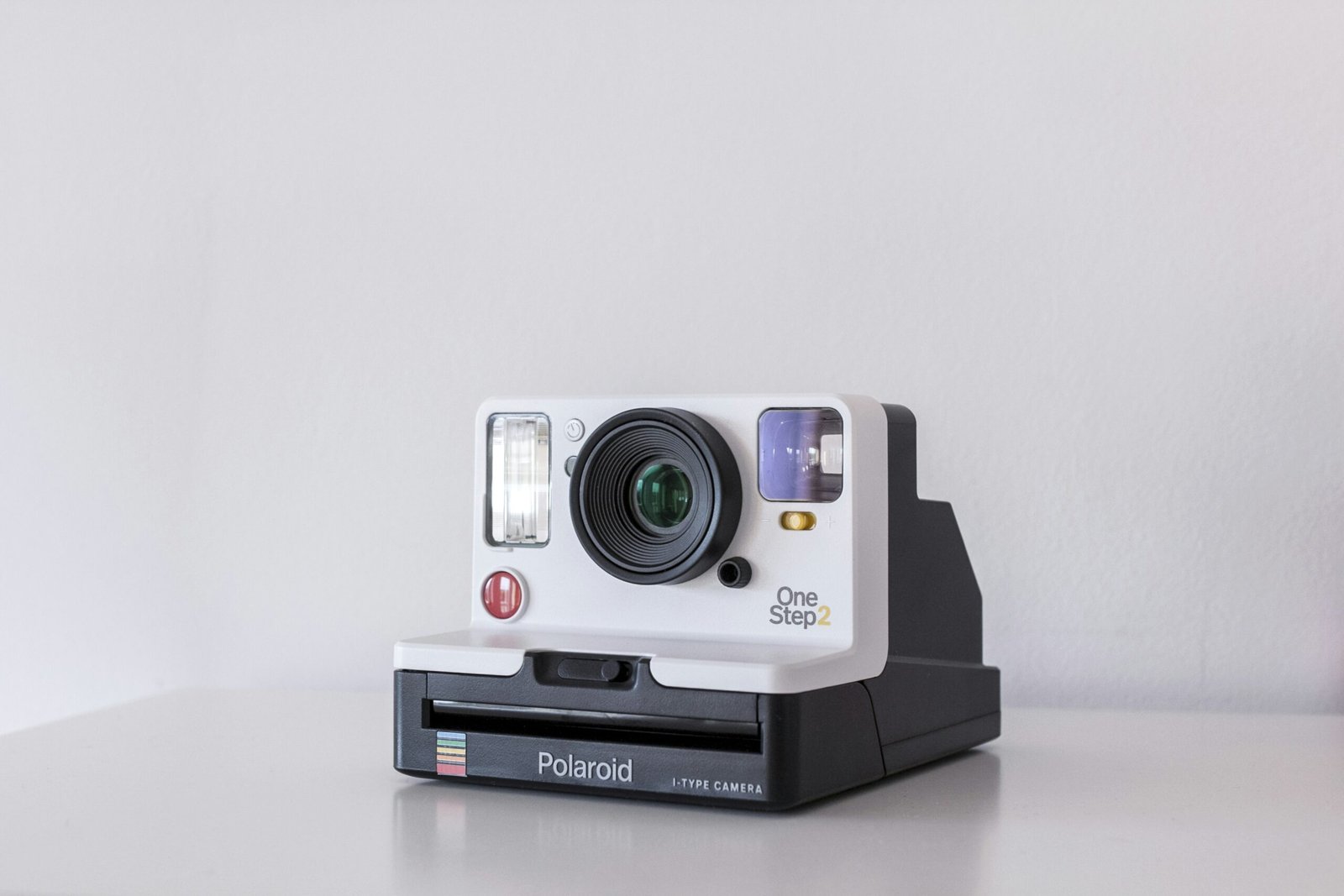
The hard-edged, glossy-black tech look is softening — fast.
2026 products lean into rounded “blobby” organic shapes, textile coverings, natural textures, and warm CMF. It’s not just styling. These forms create emotional connection and make technology feel like it belongs in a home, not a server room. Think speakers wrapped in acoustic fabric, handheld devices with a palmable radius, kitchen tools that feel like stoneware, and even humanoid robots with soft exteriors designed to reduce the uncanny edge.
Biophilic industrial design plays a role here too — not literal leaves, but natural patterns, muted warm palettes, and materials that age rather than degrade. A product that develops a patina is telling you it was meant to stay.
There’s also a functional bonus: when form is the interface, you need fewer screens and fewer buttons. A single continuous gesture — squeeze, twist, slide — can replace a menu. That’s less cognitive load and often better accessibility. The best example isn’t a gadget at all: it’s a well-considered chair or tool where you know how to use it before anyone explains it.
If you spec CMF, pull early material swatches into physical prototypes — don’t trust the screen. Warm neutrals and textiles photograph differently under studio lights than they feel in a living room.
4. Modularity, Personalization and Invisible Tech
Two ideas that used to compete — mass production and personalization — are now being solved together through modularity.
Modular product design lets users or pros swap components (sensors, storage, handles, color shells) without a full redesign. That does three things: it extends product life, it lets the same platform serve different use cases, and it makes repair realistic. A modular phone, power tool, or medical cart isn’t a compromise in 2026; it’s often the more considered solution.
The second piece is quieter: invisible technology. The strongest products adapt based on use patterns rather than demanding input.
- An air purifier that learns when you cook and adjusts without a notification
- A desk that nudges height at the right moment instead of asking you to program it
- IoT connectivity that serves outcomes users feel — cleaner air, better sleep, fewer steps — rather than a dashboard they have to check
This is human-centered product design in the practical sense: reduce cognitive load, respect attention, and let the product be a better tool, not a louder one. If you’re building connected products, the test is simple — does the intelligence mean the user has to do less? If not, it’s probably decoration.
Tooling-wise, this is where your Fusion 360 and SolidWorks configurations, Blender geometry nodes for variant exploration, and KeyShot CMF variants pay off immediately — model the system once, render and test the variants fast.
What Product Teams Should Do Next
| Trend | This quarter | Metric to track |
|---|---|---|
| Circular & repairable | Run a disassembly review on your next prototype; publish a repair score internally | Time to disassemble + spare-parts availability (years) |
| Generative + AI | Run one generative study on a real housing or bracket; prototype top 2 results | Weight saved (%) vs. design time (hours) |
| Soft & biophilic forms | Prototype one soft-touch or textile-wrapped variant of a hard-tech surface | User preference in blind touch test + CMF durability |
| Modular & invisible tech | Map one user journey where the product could adapt without a prompt | Steps eliminated + support tickets avoided |
The Bottom Line
The through-line in sustainable product design for 2026 is restraint: design less, but design it to last, to repair, to feel good, and to get smarter quietly. Brands that treat circularity, AI collaboration, tactile CMF, and invisible intelligence as a system — not a checklist — are the ones that will still be relevant when the next hardware cycle hits.
If your last project relied on a sealed case, a glossy CMF, and a companion app that users never opened, 2026 is a good year to rethink the brief. Design for repair, emotional resonance, and real-world adaptability — and measure whether users actually have to do less.
Building something physical? Compare platforms in our tools directory — from Fusion 360 and SolidWorks to Rhino, Blender, and KeyShot — and see which workflow matches a circular, AI-assisted, human-centered process.
FAQ
What is circular design in industrial design?
Circular design plans a product’s entire life — including repair, refurbishment, and recycling — from the start. It favors disassembly, component swaps, recycled or bio-based materials, and manufacturing that supports reuse over replacement.
How is generative AI used in product design?
Designers define performance, material, and manufacturing constraints; generative tools then explore thousands of geometries and propose optimized options. Humans refine for aesthetics, ergonomics, and context — often cutting weight by 20–40% on structural parts.
Why are products looking softer in 2026?
Rounded, textile-covered, and biophilic forms create emotional connection and make tech feel at home. They also often improve ergonomics and let form serve as the interface, reducing reliance on screens.
What does “invisible tech” mean?
Technology that adapts to use patterns without demanding constant input — quiet, service-oriented IoT that improves outcomes users actually feel, rather than adding dashboards.
Sources & Further Reading
- Dezeen, ArchDaily, Core77 — recent coverage of generative, circular, and soft-product launches (2025–2026)
- CMF Design Reports & Gensler Product Forecasts — modularity, biophilic CMF, and human-centered IoT
- Autodesk Fusion 360 & Dassault Systèmes documentation — generative design and simulation workflows
We link directly to tools so you can verify workflows — Fusion 360, SolidWorks, Rhino, Blender, KeyShot. Last checked: September 2026.
2014 ready-to-use AI prompts — organised by discipline and category, each copyable in one click, free and no sign-up needed. Browse the prompt library →